

The Campaign That Won Applause, but Lost Trust

Sustainable Branding in Digital Marketing
A fast-growing lifestyle brand launched a powerful digital campaign around sustainability. The visuals were stunning: green landscapes, eco-friendly messaging, and bold claims about being “100% sustainable.”
The campaign gained traction quickly. Social media engagement surged, influencers amplified the message, and media coverage followed.
But within weeks, cracks began to show.
Consumers started questioning the claims. Reports surfaced that the brand’s supply chain wasn’t as eco-friendly as advertised. Conversations shifted from praise to criticism. The campaign that once built visibility is now damaged credibility.
The problem wasn’t the idea of sustainability; it was the lack of authenticity behind it.
This is the reality of modern branding. In 2026, sustainability is no longer a marketing trend; it is an expectation.
And this is why sustainable branding in digital marketing is not just about messaging, but about meaning, consistency, and trust.
What Is Sustainable Branding in Digital Marketing?
Sustainable branding in digital marketing goes beyond promoting eco-friendly products. It is about aligning brand values, communication, and actions with long-term environmental, social, and ethical responsibility.
It includes:
- Transparent communication
- Ethical storytelling
- Responsible content creation
- Purpose-driven campaigns
- Consistent brand behavior
In essence, sustainable branding in digital marketing is about building a brand that people can trust over time, not just admire in the moment.
Why Sustainable Branding in Digital Marketing Matters More Than Ever
Consumers today are more conscious than ever. They actively research brands, question claims, and support businesses that align with their values.
This shift has transformed how brands are perceived.
Sustainable branding:
- Builds long-term trust
- Strengthens brand loyalty
- Enhances reputation
- Differentiates brands in crowded markets
Brands that ignore sustainability risk are seen as outdated or inauthentic.
This is why sustainable branding in digital marketing has become a strategic priority rather than a branding add-on.
Sustainable Branding in Digital Marketing: Moving Beyond Greenwashing
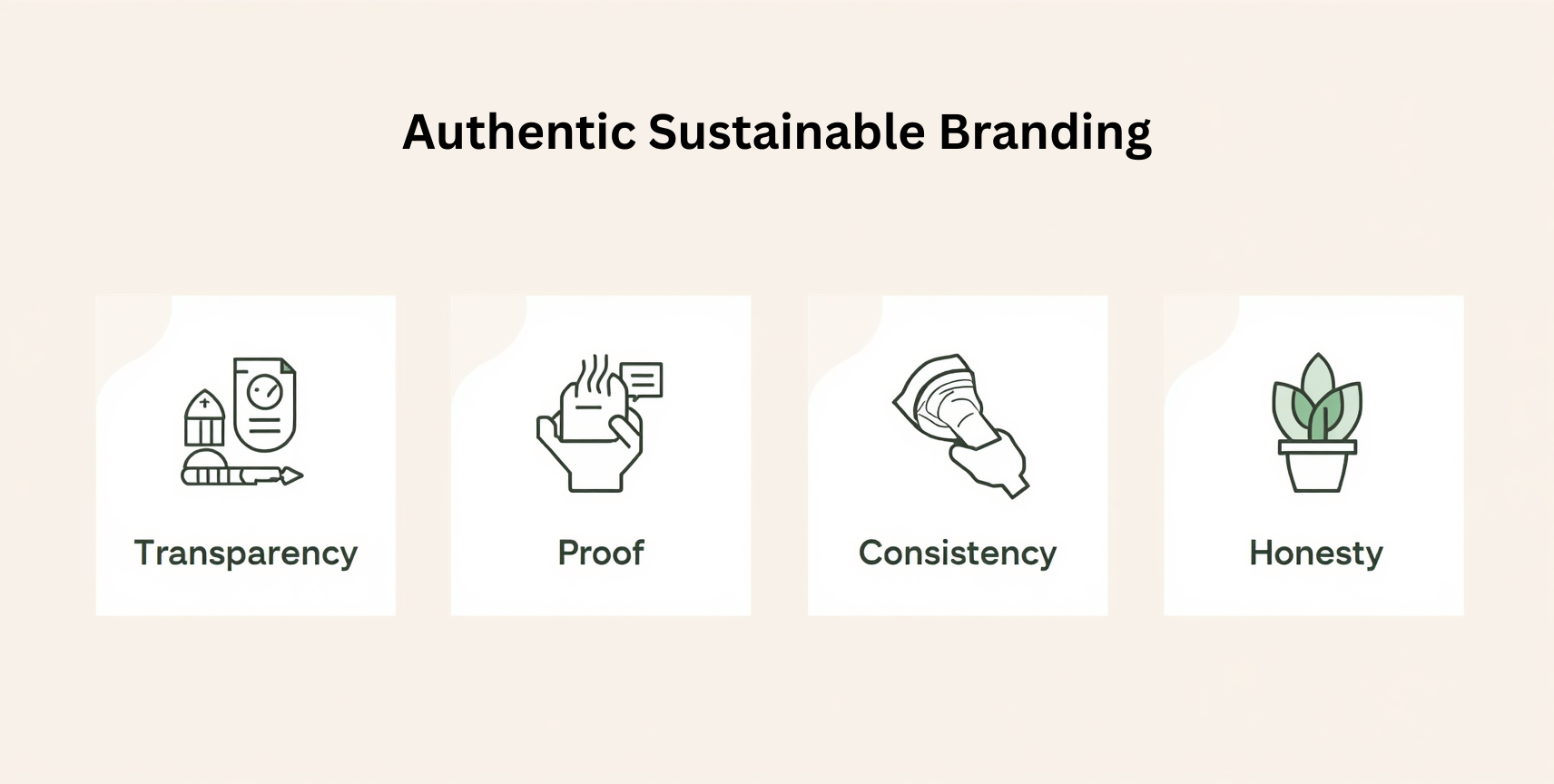
One of the biggest challenges brands face today is avoiding “greenwashing”, the practice of exaggerating or falsely promoting sustainability efforts.
Modern audiences are quick to identify inconsistencies between what brands say and what they actually do.
To succeed, brands must:
- Back claims with proof
- Communicate transparently
- Avoid exaggerated messaging
- Share both progress and challenges
Authenticity is the foundation of sustainable branding in digital marketing. Without it, even the most creative campaigns can backfire.
Real-Life Example
Patagonia: Purpose-Driven Branding
Patagonia is often cited as a global leader in sustainable branding.
The brand does not just talk about sustainability; it builds its entire business model around it. From ethical sourcing to environmental activism, Patagonia consistently aligns its actions with its messaging.
One of its most famous campaigns even encouraged customers to buy less, promoting responsible consumption over profit.
This approach has earned Patagonia immense trust and loyalty, proving that sustainable branding in digital marketing works when it is rooted in genuine purpose.
IKEA: Transparency in Action
IKEA has made significant efforts to integrate sustainability into its brand communication.
The company openly shares its goals around renewable energy, sustainable sourcing, and circular product design. It communicates progress through digital platforms, making sustainability a visible and measurable part of its brand narrative.
By focusing on transparency and continuous improvement, IKEA demonstrates how sustainable branding in digital marketing can build credibility at scale.
Sustainable Branding in Digital Marketing and Content Strategy
Content plays a crucial role in sustainable branding.
Brands must shift from promotional content to meaningful storytelling that reflects real impact.
Effective strategies include:
- Sharing behind-the-scenes processes
- Highlighting real initiatives
- Educating audiences on sustainability
- Creating long-term content series instead of one-off campaigns
Consistency is key. Sustainable branding is not built through a single campaign; it is built through continuous communication.
The Role of PR in Sustainable Branding in Digital Marketing
PR plays a vital role in shaping how sustainability efforts are perceived.
A strong PR strategy ensures that:
- Sustainability initiatives are communicated clearly
- Media narratives align with brand values
- Stakeholders receive accurate information
- Brand credibility is maintained
PR helps transform sustainability from an internal effort into a public narrative.
This reinforces why sustainable branding in digital marketing requires alignment between messaging, media, and action.
The Anima Marcomm Perspective
Sustainability as a Communication Responsibility
From a modern communications standpoint, Anima Marcomm believes that sustainability is no longer just a brand initiative; it is a fundamental responsibility. In an era where audiences demand radical transparency and accountability, brands must move beyond performative messaging. At Anima Marcomm, our philosophy is that communication should reflect reality, not aspiration alone.
The Anima Marcomm Framework for Sustainable Branding
We believe that building a credible, sustainable brand requires a rigorous, four-part approach:
-
Active Listening: Identifying and addressing the specific environmental and social concerns of your audience.
-
Strategic Alignment: Ensuring all messaging is directly supported by tangible, verifiable actions.
-
Honest Narrative Building: Crafting brand stories that are transparent about progress, challenges, and evolution.
-
Creative Credibility: Using bold, creative storytelling that remains rooted in factual integrity.
Commitment Over Campaigns
The most impactful brands are those that treat sustainability not as a temporary campaign theme, but as a long-term commitment embedded within their broader communication strategy. Anima Marcomm helps brands bridge the gap between intent and impact, ensuring that their voice in the sustainability conversation is both meaningful and enduring.
How Brands Can Build Sustainable Branding in Digital Marketing
To implement sustainable branding effectively, brands should focus on:
1. Define Clear Sustainability Goals
Establish measurable and realistic objectives.
2. Communicate Transparently
Share both successes and challenges openly.
3. Align Internal and External Messaging
Ensure that brand communication reflects actual practices.
4. Educate, Don’t Just Promote
Help audiences understand sustainability rather than just selling it.
5. Maintain Consistency Across Channels
From social media to PR, messaging should remain aligned.
Final Thoughts
Sustainability is no longer optional; it is expected.
In 2026, brands are judged not only by what they sell but also by what they stand for.
Sustainable branding in digital marketing is about building trust, demonstrating responsibility, and creating long-term value for both the business and society.
Brands that embrace this approach will not only stay relevant but also lead the future of marketing.
Because in the end, sustainability is not just about protecting the planet, it is about protecting the brand itself.