

The Brand Everyone Saw — But Nobody Remembered

Importance of Consistent Branding
A growing startup once invested heavily in digital marketing. Their ads were everywhere: Instagram, LinkedIn, YouTube, and even billboards in major cities. Every campaign looked visually impressive, yet something was missing.
One month, the brand sounded playful and youthful. The next month, it adopted a formal corporate tone. Their website used one colour palette, social media used another, and their messaging constantly shifted depending on the platform.
Customers noticed the inconsistency.
Despite strong visibility, the brand struggled with recall and trust. People recognised the advertisements but couldn’t clearly describe what the company actually stood for.
Meanwhile, a competitor with a much smaller marketing budget was steadily growing. Their visuals, tone, messaging, and customer experience felt unified everywhere. Whether consumers saw the brand on Instagram, a website, or a PR article, the identity remained unmistakably consistent.
That consistency built familiarity. Familiarity built trust. And trust built growth.
This is why the importance of consistent branding has become one of the most critical factors in modern marketing.
What Is the Importance of Consistent Branding?
Consistent branding refers to maintaining a unified identity across all communication channels and customer touchpoints.
This includes:
- Brand voice and tone
- Visual identity
- Messaging
- Values and positioning
- Customer experience
The importance of consistent branding lies in its ability to create recognition, trust, and emotional connection over time.
In today’s crowded digital landscape, consumers interact with brands across multiple platforms every day. If the experience feels fragmented or inconsistent, trust weakens quickly.
Importance of Consistent Branding in Building Trust
Trust is one of the strongest outcomes of consistent branding.
When audiences repeatedly experience the same tone, visuals, and messaging, they begin to perceive the brand as reliable and professional.
Consistency signals:
- Stability
- Credibility
- Clarity
- Authenticity
This is especially important in digital marketing, where consumers make split-second judgments about brands.
The importance of consistent branding becomes even more significant because customers are no longer buying only products or services; they are buying confidence in the brand itself.
Importance of Consistent Branding Across Digital Platforms

Modern consumers move seamlessly between:
- Websites
- Email campaigns
- PR articles
- Search engines
A brand must feel recognisable across all these touchpoints.
Imagine seeing a sleek, premium-looking advertisement, only to land on a website that feels outdated and disconnected. That inconsistency creates confusion and reduces credibility.
This is why the importance of consistent branding extends beyond design; it shapes the entire customer perception journey.
Brands that maintain consistency across platforms create stronger recall and smoother customer experiences.
Importance of Consistent Branding in Brand Recall
One of the biggest advantages of consistent branding is memorability.
Consumers are exposed to thousands of messages daily. Consistency helps brands stand out by reinforcing familiar patterns.
Repeated exposure to the same:
- Logo
- Colors
- Tone of voice
- Messaging style
- Brand narrative
creates a stronger mental association.
This explains the importance of consistent branding in building long-term brand equity.
Brands that are remembered are more likely to be trusted, recommended, and chosen.
Real-Life Example
Apple — Simplicity and Consistency
Apple is one of the strongest examples of consistent branding.
Whether through product design, advertising, packaging, or digital communication, Apple maintains a clean, minimal, and premium identity.
Its messaging consistently focuses on:
- Innovation
- Simplicity
- User experience
- Creativity
No matter where audiences interact with Apple, the experience feels aligned.
This consistency has helped Apple build one of the most recognisable and trusted brands globally, proving the true importance of consistent branding.
Coca-Cola — A Unified Global Identity
Coca-Cola has maintained remarkable brand consistency for decades.
Its iconic red colour, emotional storytelling, and optimistic messaging remain recognisable worldwide. Even when campaigns evolve creatively, the core brand identity remains intact.
This consistency allows Coca-Cola to stay culturally relevant while preserving familiarity.
The brand demonstrates how the importance of consistent branding contributes to emotional connection and long-term loyalty.
Importance of Consistent Branding in PR and Communication
In PR, consistency is essential for credibility.
If a brand communicates differently across press releases, interviews, social media, and public campaigns, audiences may question authenticity.
A consistent communication strategy ensures:
- Stronger media perception
- Clearer storytelling
- Better reputation management
- More impactful campaigns
This is why the importance of consistent branding is closely connected to effective PR and strategic communication.
Importance of Consistent Branding in Customer Experience
Branding is not limited to marketing materials; it extends into customer experience.
Every interaction matters:
- Customer support tone
- Website experience
- Packaging
- Social media replies
- Email communication
When all these touchpoints align, customers feel a stronger sense of connection and trust.
Consistency creates predictability, and predictability creates comfort.
This reinforces the overall importance of consistent branding in customer retention and loyalty.
A Subtle Anima Marcomm Perspective
Branding Beyond Visual Identity
From the Anima Marcomm communications perspective, branding is no longer just about logos or aesthetics; it is about coherence. The most impactful brands are those that align their storytelling, visuals, values, and audience experience into a single, recognisable narrative.
In an era of fragmented attention spans and constant digital noise, Anima Marcomm maintains that consistency is the primary tool for remaining clear and credible. Strong branding today requires:
-
Strategic Communication: Moving beyond slogans toward transparent, honest information.
-
Unified Storytelling: Treating the brand as an evolving narrative rather than a collection of isolated campaigns.
-
Active Listening: Cultivating a deep audience understanding to foster genuine engagement.
-
Long-Term Consistency: Prioritising value alignment and trust-building over short-term trends.
Brands that communicate consistently are better positioned to build meaningful, lasting relationships instead of merely capturing temporary attention.
How Brands Can Maintain Consistent Branding
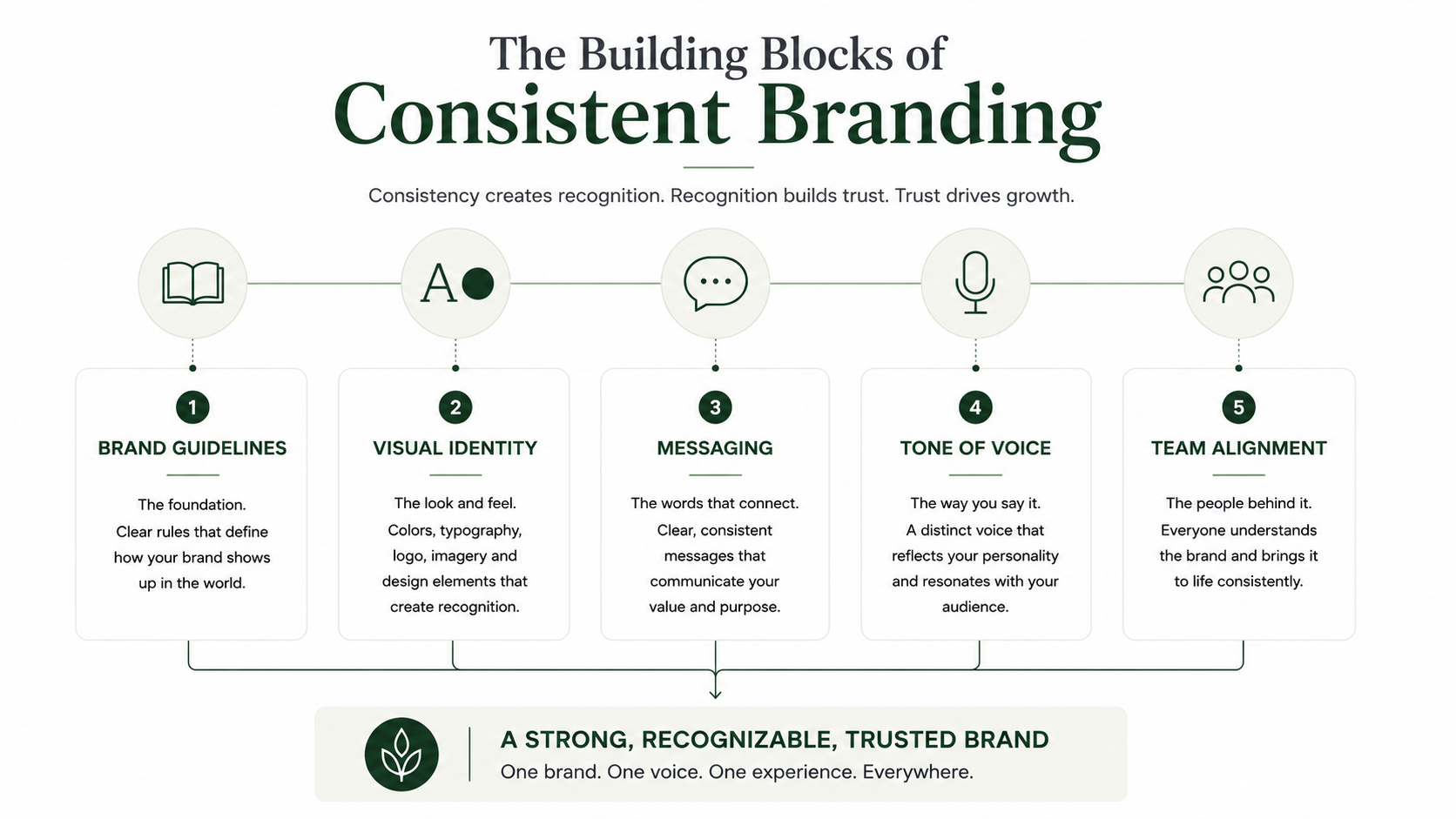
To strengthen consistency, brands should focus on:
1. Develop Clear Brand Guidelines
Define tone, visuals, messaging, and communication standards.
2. Align All Teams
Marketing, PR, sales, and customer support should communicate consistently.
3. Maintain Visual Identity Across Platforms
Use cohesive design elements and branding assets.
4. Create a Strong Brand Voice
Ensure messaging feels recognisable everywhere.
5. Focus on Long-Term Positioning
Avoid changing brand personality based on temporary trends.
Final Thoughts
Importance of Consistent Branding
In today’s competitive digital environment, consistency is not optional; it is essential.
Brands that communicate inconsistently risk confusion, weak recall, and loss of trust. Brands that maintain a clear and unified identity create stronger recognition, credibility, and emotional connection.
The importance of consistent branding lies in its ability to transform visibility into trust and trust into loyalty.
Because in the end, successful branding is not about being seen once, it is about being remembered consistently.