

The Brand That Was Remembered Long After the Ads Disappeared

How PR Builds Long-Term Brand Value
A decade ago, a growing company launched an aggressive advertising campaign. Billboards covered major cities, digital ads appeared everywhere, and social media promotions generated strong short-term visibility.
At the same time, a competitor with a much smaller advertising budget took a different approach. Instead of focusing only on paid promotions, the brand invested heavily in public relations. It consistently shared meaningful stories, built strong media relationships, highlighted customer impact, and positioned its leadership as trusted industry voices.
Years later, the difference became clear.
The first brand faded from public conversation once its advertising spend slowed down. The second brand, however, continued to be trusted, discussed, and respected. Media outlets still quoted its leadership. Customers associated it with credibility and authenticity. Investors viewed it as reliable.
The reason was simple: advertising created awareness, but PR built reputation.
This is why how PR builds long-term brand value has become one of the most important conversations in modern business and marketing.
What Is How PR Builds Long-Term Brand Value?
Public Relations (PR) is not just about press releases or media coverage. It is about shaping perception, building trust, and creating meaningful relationships between brands and their audiences.
The concept of how PR builds long-term brand value lies in its ability to strengthen credibility over time through:
- Consistent communication
- Media visibility
- Thought leadership
- Reputation management
- Audience trust
Unlike short-term promotional campaigns, PR focuses on building sustainable brand equity.
How PR Builds Long-Term Brand Value Through Trust
Trust is one of the strongest drivers of long-term business success.
Consumers today are highly sceptical of direct advertising. They are more likely to trust:
- Earned media coverage
- Expert opinions
- Industry recognition
- Authentic storytelling
This is where PR becomes powerful.
The process of how PR builds long-term brand value starts with creating credibility that audiences perceive as genuine rather than promotional.
A positive media feature or an insightful leadership interview often carries more influence than a paid advertisement because it feels more trustworthy.
How PR Builds Long-Term Brand Value Through Consistent Storytelling
Brands are remembered through stories, not just slogans.
PR helps brands create and communicate narratives that evolve. These stories may focus on:
- Company vision
- Customer impact
- Industry innovation
- Social responsibility
- Leadership expertise
Consistent storytelling helps audiences emotionally connect with brands.
The strength of how PR builds long-term brand value lies in repetition and consistency. When a brand continuously communicates clear values and meaningful narratives, it becomes recognisable and memorable.
How PR Builds Long-Term Brand Value in Reputation Management
A strong reputation takes years to build and minutes to damage.
PR plays a critical role in:
- Managing public perception
- Addressing crises
- Handling media communication
- Protecting brand credibility
Brands with established PR credibility often recover faster during challenging situations because audiences already trust them.
This reinforces the importance of how PR builds long-term brand value beyond marketing campaigns alone.
PR creates resilience by building positive public perception before challenges arise.
Real-Life Example
Tata Group — Reputation Built Over Decades
The Tata Group is one of India’s strongest examples of long-term brand value built through trust and reputation.
While Tata invests in marketing, its real strength lies in public perception. Over the decades, the brand has consistently communicated values of ethics, reliability, and social responsibility.
Through strategic communication, leadership credibility, and responsible corporate actions, Tata has become synonymous with trust in India.
This demonstrates how PR builds long-term brand value that extends far beyond advertising visibility.
Airbnb — Rebuilding Trust Through PR
Airbnb faced significant challenges during the pandemic when global travel came to a halt.
Instead of relying solely on promotional marketing, the company used PR and transparent communication to maintain trust. It openly addressed challenges, communicated policy changes clearly, and shared human-centred stories about hosts and travellers.
This helped Airbnb preserve brand loyalty during uncertain times.
The example highlights how PR builds long-term brand value, which is deeply connected to transparency and authentic communication.

How PR Builds Long-Term Brand Value Through Thought Leadership
Modern audiences trust expertise.
PR helps position founders, executives, and brands as thought leaders through:
- Media interviews
- Opinion articles
- Industry panels
- Podcasts and webinars
When leaders consistently share valuable insights, they strengthen both personal credibility and brand authority.
The role of how PR builds long-term brand value becomes especially important in industries where trust and expertise influence decision-making.
Thought leadership transforms brands from sellers into respected voices.
How PR Builds Long-Term Brand Value in the Digital Era
In today’s digital environment, PR and digital marketing work together more closely than ever.
PR content now influences:
- Search engine visibility
- Social media conversations
- Online reputation
- Audience engagement
A strong PR strategy can improve brand discoverability and credibility across digital platforms.
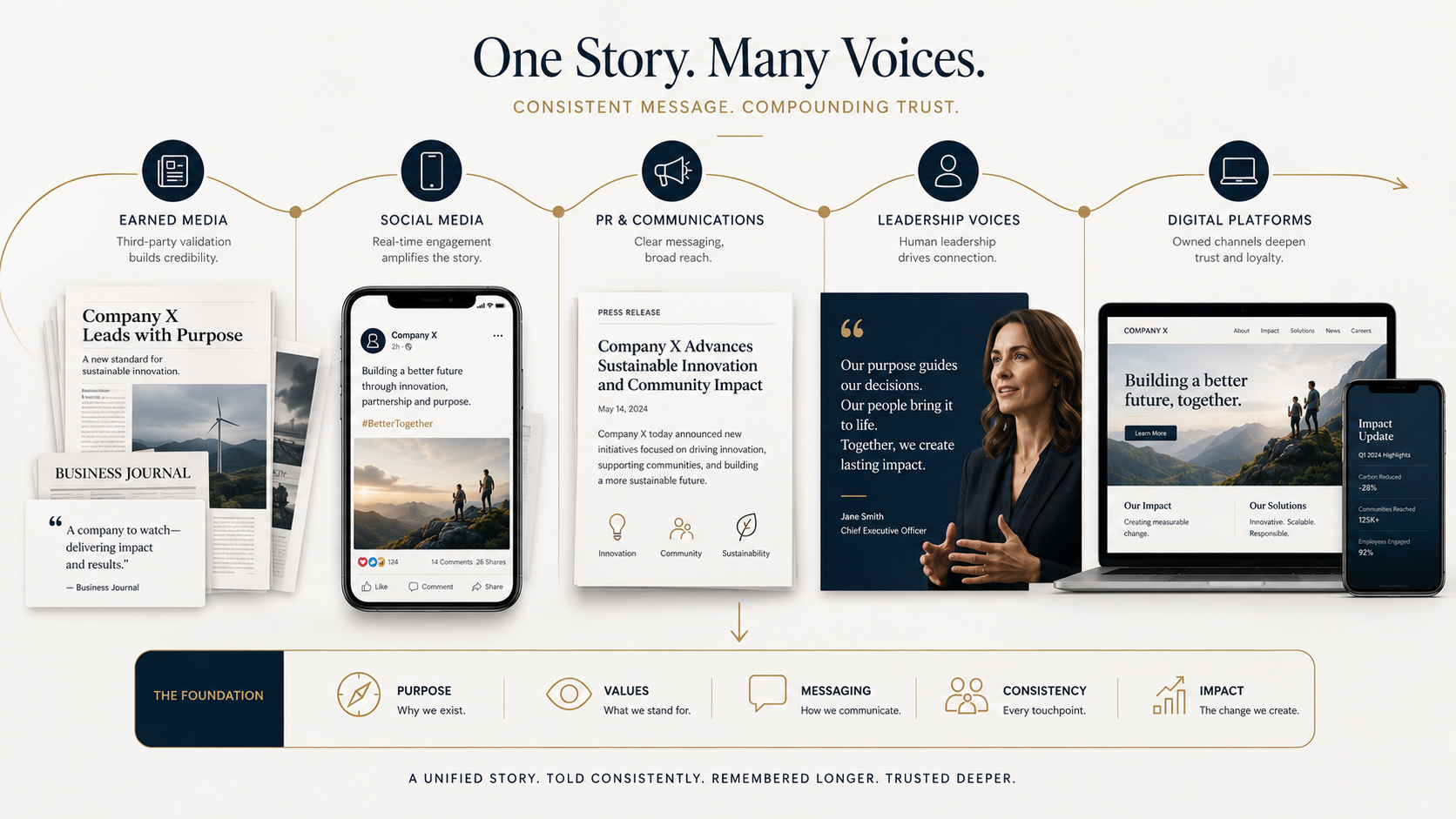
This modern integration strengthens how PR builds long-term brand value by ensuring consistent communication across channels.
A Subtle Anima Marcomm Perspective
Reputation as a Long-Term Asset
From the Anima Marcomm communications perspective, PR is most effective when it is treated as a long-term investment rather than a short-term publicity tool. The strongest brands are not necessarily the loudest; they are the most trusted.
Anima Marcomm maintains that building this essential trust requires:
-
Consistent Storytelling: Ensuring the brand narrative remains unified across every platform.
-
Strategic Communication: Moving beyond noise to deliver clear, purposeful messages that align with business goals.
-
Media Credibility: Establishing the brand as a dependable, authoritative voice in its industry.
-
Authentic Audience Engagement: Fostering genuine human connections rather than superficial digital interactions.
In today’s rapidly changing digital landscape, Anima Marcomm observes that brands focusing only on visibility risk becoming forgettable. Brands that prioritise reputation create deeper and more lasting relationships. This is why PR should not be viewed as a supporting function, but as a strategic pillar of long-term brand growth.
How Brands Can Use PR to Build Long-Term Brand Value
To maximise the benefits of PR, brands should focus on:
1. Build Consistent Media Relationships
Strong media connections create ongoing credibility.
2. Focus on Authentic Storytelling
Audiences connect with genuine narratives, not overly promotional messaging.
3. Invest in Thought Leadership
Position leadership teams as industry experts.
4. Align PR with Brand Values
Communication should consistently reflect the company’s purpose and identity.
5. Integrate PR and Digital Marketing
Unified storytelling strengthens visibility and trust together.
Final Thoughts
How PR Builds Long-Term Brand Value
In today’s competitive market, attention may create visibility, but trust creates longevity.
The true power of how PR builds long-term brand value lies in its ability to shape perception, strengthen credibility, and build emotional connection over time.
Advertising can attract audiences quickly, but PR creates the reputation that keeps them loyal.
Brands that invest in meaningful communication, authentic storytelling, and trust-building strategies are better positioned for sustainable growth in 2026 and beyond.
Because in the end, successful brands are not just recognised, they are respected.