

The Moment That Proved Short-Form Content Is Not a Trend. It’s a Behaviour Shift

Instead, the numbers were underwhelming.
Average watch time: 7 seconds.
Completion rate: below 10%.
Comments: minimal.
Shares: almost non-existent.
At the same time, a rough, 9-second behind-the-scenes clip, shot casually on a phone, was quietly gaining traction. No script, no production crew, no brand jingle. Just authenticity.
By morning, that short clip had outperformed the high-budget film by a massive margin.
This was not luck. It was a signal.
The audience was not rejecting the brand; they were rejecting the format. This shift confirms that Short-Form Content Is Not a Trend. It’s a Behaviour Shift.
This is the reality of modern digital consumption: Short-Form Content Is Not a Trend. It’s a Behaviour Shift.
Why the Short-Form Behavior Shift Matters in 2026
For years, marketers treated short-form content as a “platform trend”, something driven by algorithms, youth culture, or fleeting attention spans.
That interpretation is outdated.
Short-form content represents a bigger change in how people consume, process, and interact with information. It reflects:
- Faster decision-making
- Preference for bite-sized storytelling
- Mobile-first content habits
- Visual-first communication
- Micro-moments of engagement
Consumers no longer “sit down” to consume content. They scroll, scan, react, and move on. This is why Short-Form Content Is Not a Trend. It’s a Behaviour Shift that brands must strategically embrace rather than reluctantly adapt to.
The Psychology Behind Why Short-Form Content Is Not a Trend. It’s a Behaviour Shift

This shift is rooted in cognitive behaviour.
Modern audiences are exposed to thousands of messages daily, from ads, reels, posts, notifications, and videos. Their brains have evolved to prioritise:
- Speed over depth
- Visual clarity over text-heavy explanations
- Emotional impact over detailed rational arguments
- Instant gratification over prolonged engagement
Short-form content aligns perfectly with this reality. It proves that Short-Form Content Is Not a Trend. It’s a Behaviour Shift rooted in how our brains process information in a high-speed digital world
Brands that understand this realise that storytelling in 2026 is not about saying more; it is about telling more in less time.
This cognitive evolution is the engine driving the Short-Form Behavior Shift, forcing brands to prioritize immediate emotional resonance over long-winded explanations.
Short-Form Content Is Not a Trend. It’s a Behaviour Shift in Brand Communication
Traditional marketing was built on long-form storytelling: commercials, documentaries, brochures, and detailed brand films.
Today, communication is modular.
A brand story is no longer one big film; it is a series of micro-stories told across multiple short-form touchpoints. Each reel, clip, or post serves a purpose:
- One educates
- One entertains
- One builds trust
- One drives action
This approach does not replace long-form content; it complements it. But it recognises that the entry point for modern audiences is often short-form.
Case Study: Adapting to the Short-Form Behavior Shift
A Beauty Brand That Cracked the Code
A global beauty brand once relied heavily on glossy 3-minute brand films featuring celebrities. While visually stunning, engagement was declining.
The brand pivoted.
Instead of big-budget films, it started posting 10–15 second clips showing real customers applying products, honest reactions, and quick tutorials. No heavy editing. No scripted perfection.
Within months, engagement skyrocketed. More importantly, conversion improved because audiences felt closer to the brand.
This demonstrated that Short-Form Content Is Not a Trend. It’s a Behaviour Shift, and brands that adapt win.
News Consumption in the Age of Micro-Content
News publishers once depended on long-form articles and hour-long panel discussions. Today, breaking news often reaches audiences first through short clips, summaries, and snippets.
Many leading newsrooms now create short, visually engaging explainers instead of relying solely on lengthy reports. This has expanded their reach, especially among younger audiences.
Again, the message is clear: short-form is not replacing content, it is reshaping how content is delivered. This evolution in journalism is perhaps the clearest evidence that Short-Form Content Is Not a Trend. It’s a Behaviour Shift.
Whether it’s retail or journalism, the data confirms that Short-Form Content Is Not a Trend. It’s a Behaviour Shift driven by mobile-first lifestyle habits.
As audiences turn to snippets for their daily updates, the Short-Form Behavior Shift becomes a permanent fixture in the media landscape.
Why Short-Form Content Is Not a Trend. It’s a Behaviour Shift for PR and Digital Marketing
From a communications perspective, this shift has profound implications.
In PR, storytelling must now be:
- More visual
- More concise
- More emotionally resonant
- More real-time
Press releases alone are no longer enough. Brands must think in terms of clips, quotes, visuals, and micro-narratives that journalists and audiences can quickly consume.
In digital marketing, performance metrics are changing too. Success is no longer just measured by impressions but by retention, engagement, and relatability.
Navigating the Short-Form Behavior Shift in PR and digital marketing requires a departure from traditional press releases toward high-impact micro-narratives
A Subtle Anima Marcomm Perspective:
Communication in the Age of Behavior Shift
From a modern communications standpoint at Anima Marcomm, we believe the most forward-thinking brands do not treat short-form content as a tactic; they treat it as a reflection of how people think, feel, and interact today.
Effective brand storytelling is no longer about controlling the narrative; it is about participating in it. Through the Anima Marcomm approach, we ensure our clients stay ahead by:
-
Observing audience behavior to identify real-time trends.
-
Understanding cultural shifts before they become mainstream.
-
Adapting storytelling formats to specifically align with the Short-Form Behavior Shift across all digital social platforms
-
Blending creativity with strategy to ensure every second counts.
By focusing on these four pillars, Anima Marcomm helps brands bridge the gap created by the Short-Form Behavior Shift, turning passive viewers into active participants. At Anima Marcomm, we treat this as a core principle: Short-Form Content Is Not a Trend. It’s a Behaviour Shift that requires a total reimagining of PR strategy.
For our team, at Anima Marcomm, we believe short-form content is not just a creative choice; it is a strategic necessity driven by the global Short-Form Behavior Shift. The brands that succeed are those that respect this Short-Form Behavior Shift rather than resisting it. Mastering the Short-Form Behavior Shift is the cornerstone of modern brand authority.
Strategic Steps to Master the Short-Form Behavior Shift
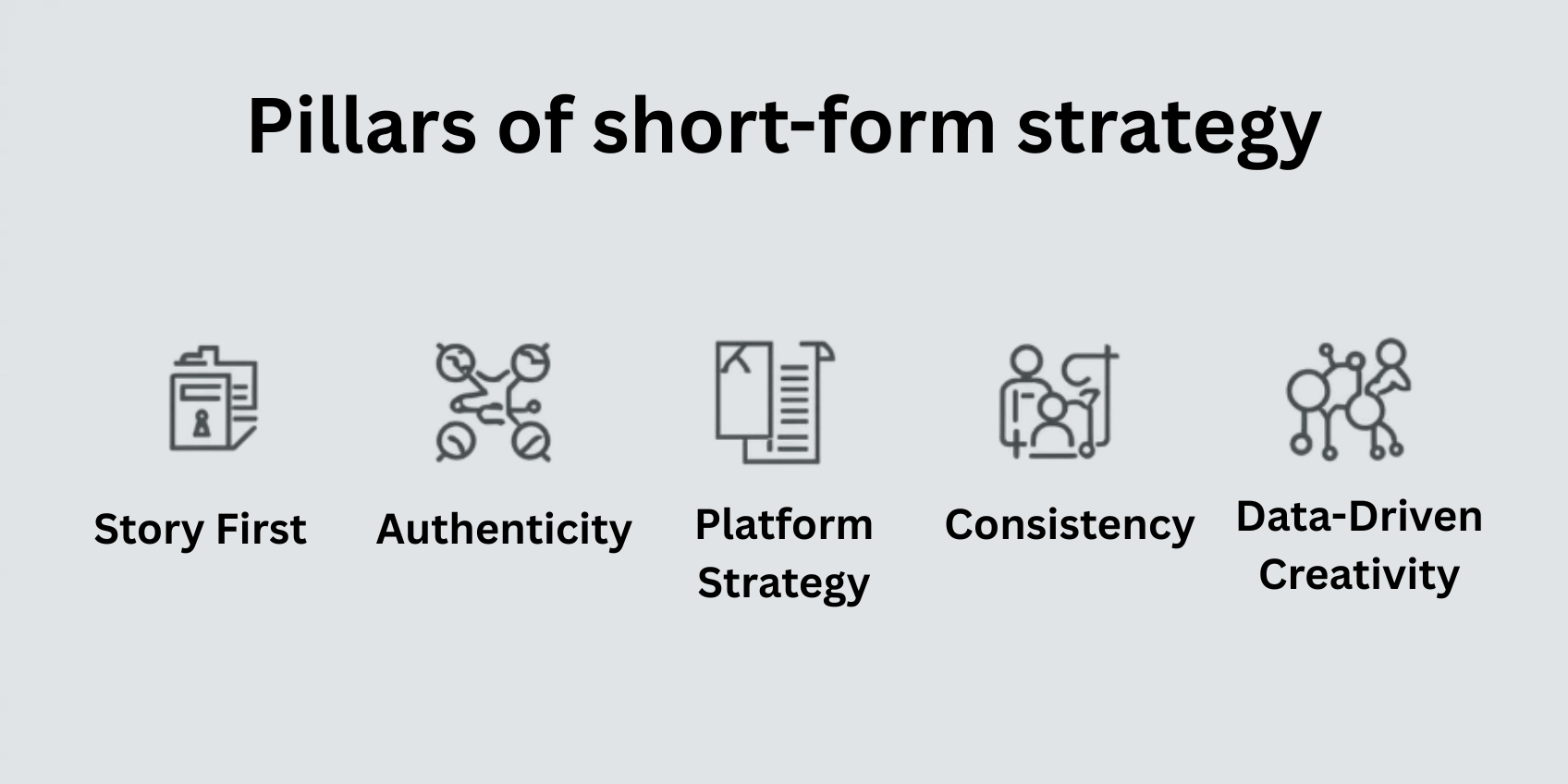
To truly adapt, brands should focus on:
1. Story First, Format Second
Start with a strong idea, then adapt it into short snippets.
2. Authenticity Over Perfection
Raw, real moments often outperform polished productions.
3. Platform-Specific Strategy
Each platform rewards different styles of short-form content.
4. Consistency, Not Just Virality
Regular posting builds familiarity and trust.
5. Data-Driven Creativity
Use analytics to refine storytelling, not limit it.
The Final Takeaway
The era of passive consumption is over.
Audiences are active, selective, and in control of what they engage with.
Short-form content is not a passing phase. It is the new language of digital communication.
Brands that embrace this shift will:
- Connect more deeply
- Communicate more effectively
- Build stronger communities
- Stay culturally relevant
Those who dismiss it risk becoming invisible in a fast-moving digital world.
Because in 2026 and beyond, storytelling is no longer about how long you speak; it is about how quickly you connect. Understanding that Short-Form Content Is Not a Trend. It’s a Behaviour Shift, which is the first step toward that connection.
Mastering the Short-Form Behavior Shift is no longer optional; it is the cornerstone of brand authority in 2026. Ready to build a strategy that respects the Short-Form Behavior Shift? Contact Anima Marcomm to get started.